Clients demanding ESG? How to turn an obligation into an opportunity
Clients asking for a sustainability report? Learn how to turn this demand into an opportunity to stand out, with ESG indicators that convince.
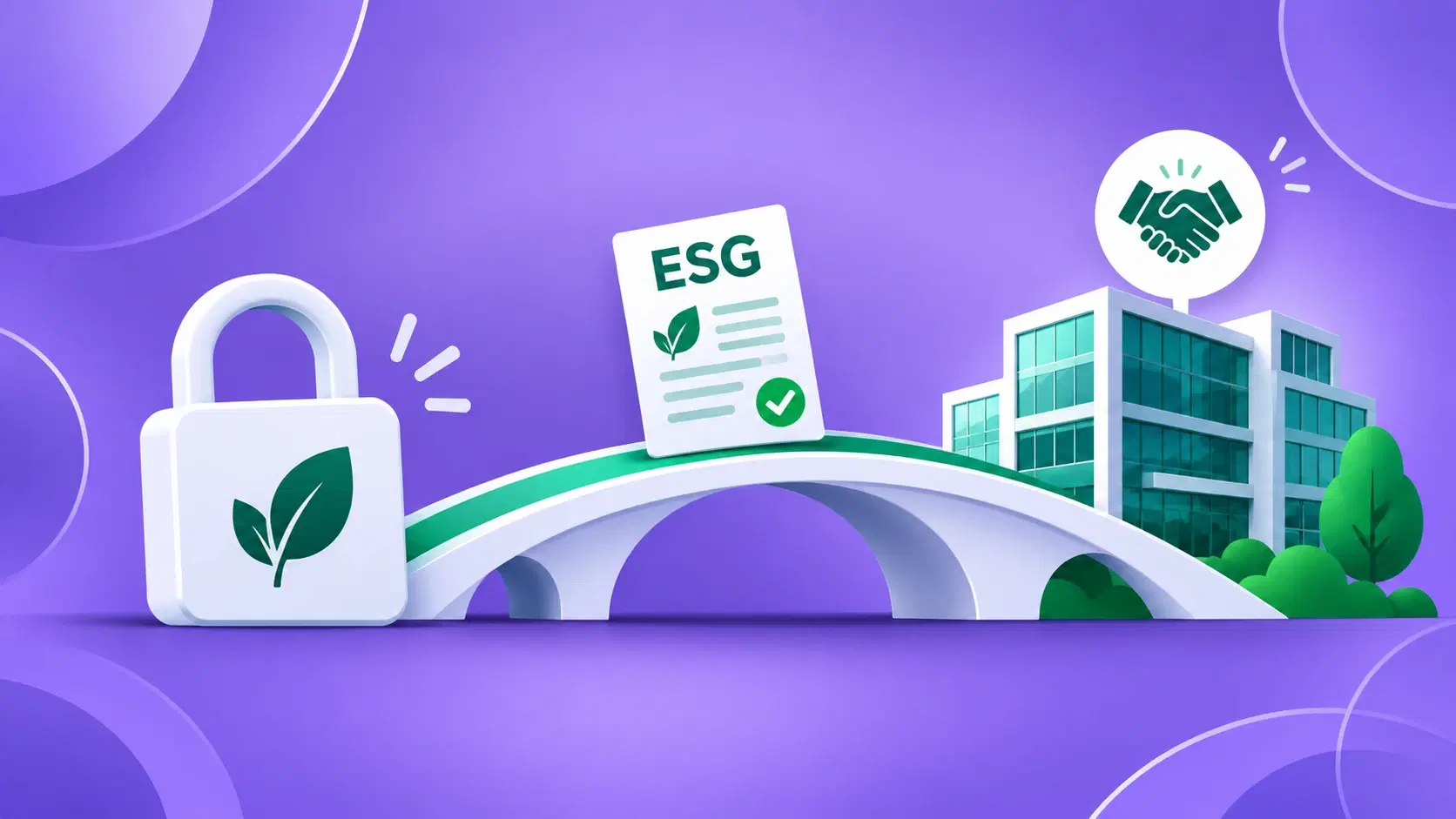
An email arrives from a large client with an ESG questionnaire several pages long, a request for emissions data and, perhaps, a reference to an ESG rating. The deadline is short, nobody in the company quite knows where to start and the first reaction is usually that of someone receiving yet another obligation.
If you run an industrial, food or construction SME, this scene is repeating itself more and more. Large companies are building their own ESG reporting and need their suppliers' data to complete it, so the pressure travels down the supply chain to your door. Those who respond well gain an advantage that much of the competition has yet to build.
In short
- ✓The client's request stems from their own reporting, so it will repeat and grow.
- ✓There is a limit to what large clients can demand from smaller suppliers, and a voluntary European standard serves as the reference for your response.
- ✓A well-organised response becomes a selection criterion in contracts, tenders and conversations with the bank.
Why do large clients ask you for ESG data?
Large companies covered by the CSRD, the European sustainability reporting directive, also have to report on their value chain. After the simplification approved at European level, the CSRD applies to companies with more than 1,000 employees and more than €450M in turnover. There are relatively few of them, but they are precisely the ones that buy from many SMEs.
Then there are emissions: a large client's Scope 3 emissions include those of its suppliers, which means your energy and material consumption ends up in their report. Banks are following the same path, as European banks are under regulatory pressure to assess the ESG risk of those they finance, and this is already visible in credit forms.
To understand what has changed in the law and who is covered, see the article What changes for SMEs under the new European ESG legislation.
What the European simplification has changed in your favour
One of the most useful changes for SMEs is the protection in the value chain. Under the European simplification package, from 2027 companies covered by the CSRD are limited to asking suppliers with up to 1,000 employees for the information provided for in the voluntary standard (the VS, formerly VSME). They can ask for more, but the supplier has the right to refuse.
Note what this means
The VS is the voluntary European standard applicable to companies not covered by the CSRD (up to 1,000 employees), and it has two modules: Basic (11 disclosure requirements) and Comprehensive (20 disclosure requirements). It works as a reasonable limit on the requests you receive and as a ready-made script for organising your response.
For more information on this standard, read the article VS (formerly VSME) explained: a practical guide for SMEs.
Even so, refusing requests has a commercial cost. In practice, the supplier that provides reliable, structured data makes the client's life easier, and is the first to come to mind when choosing who to keep working with.
Comply or stand out: the comparison
| Responding just to comply | Responding with strategy | |
|---|---|---|
| Data | Scattered sheets, filled in in a hurry | A single database, updated every year |
| Reuse | Each new questionnaire starts from zero | The same answers serve clients, banks and tenders |
| Image | A supplier that follows the request | A partner that anticipates risk in the supply chain |
| Result | You avoid losing the contract | You strengthen your position at renewal and in new proposals |
Six steps to turn the request into an opportunity
Understand what the client really needs
A questionnaire, a request for Scope 3 data and an ESG rating are different things. Talk to your client and your sales team to find out what is essential and what can wait.
Create a single database
Electricity, gas and fuel consumption, water, waste, number of employees, workplace accidents and training. These ESG indicators answer most questionnaires and only need to be collected once a year.
Calculate Scope 1 and 2 emissions
With your energy and fuel consumption you already have the basis. Scope 3 can grow in stages, starting with the purchases that weigh most in your business.
Formalise policies and certifications
An environmental certification such as ISO 14001 and, for safety, ISO 45001, carry weight in tenders and audits. If you do not have them yet, start by documenting simple environment, health and safety, and ethics policies.
Publish a short sustainability report
A few pages, based on the VS Basic module, are enough for the same document to answer clients, banks and tenders concisely.
Take the result into the sales conversation
Include the data in proposals and renewal meetings. This is where the obligation becomes a selling point.
What large clients look for in the three dimensions
Environmental
Energy, emissions, water and waste, and the reduction of the company's carbon footprint over time.
Social
Working conditions, safety, training and equality.
Governance
Policies, ethics, risk management and transparency. Governance includes innovation, so process and product improvements that reduce impacts also count.
Three typical situations, by sector
The situations below are illustrative and do not correspond to real cases.
Manufacturing
A large European client wants to calculate its Scope 3 emissions (value chain). To do so, it needs data from suppliers and asks you for your emissions data. The factory gathers its energy and gas bills, calculates Scope 1 and 2 emissions and delivers an organised response. With the same data, it answers a second client months later.
Food and beverage
A retail client wants evidence of environmental and social practices. The producer presents water consumption, organic waste management and its environmental certification, and comes to be seen as a lower-risk supplier.
Construction
In a tender, the company that demonstrates safety policies aligned with ISO 45001 and site waste data scores better than the one that merely states good intentions.
The same work opens doors at the bank
The data you prepare for clients also serves for your dialogue with the bank, where ESG requirements already feed into credit analysis and access to sustainable financing for SMEs. A well-made ESG report cuts the time it takes to answer each form and helps you negotiate on better terms.
The next step
When a client asks for ESG data, they want to keep working with you. Responding with method, rather than improvising, turns that request into an ESG strategy that underpins the commercial relationship and opens the way to new opportunities.
Want to organise your ESG data once and for all?
The Sustanya platform brings consumption, emissions and indicators together in one place and prepares the answers for clients and banks.
Book a DemoRead also
What changes for SMEs under the new European ESG legislation
Deadlines, who is covered and what to do now
How to create your first sustainability report without a consultant
Eight steps, from objective to publication
ESG is a business tool, not just compliance
How to turn ESG data into savings, contracts and financing
Did you enjoy this article?
Subscribe to our newsletter
Receive our ESG articles and updates directly in your inbox.
Subscribe to the newsletter