5 steps to start your SME's ESG journey
Not sure where to start with ESG? This step-by-step guide shows the quickest way to build a solid foundation without overcomplicating things.
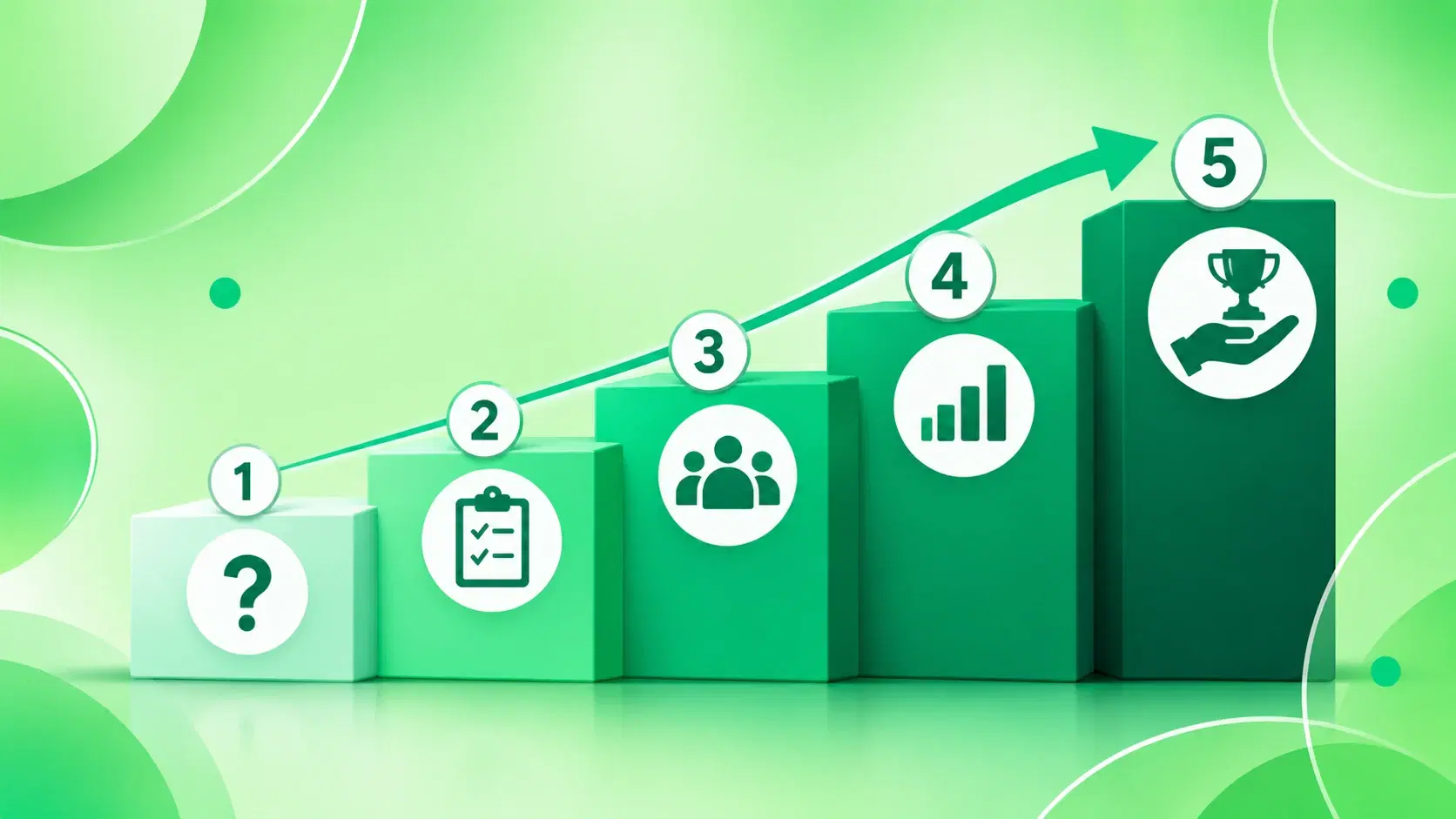
A proposal arrives from a large client with an ESG questionnaire. Or the bank asks for information about your company's environmental practices. Or you lose a tender and later find out that sustainability criteria weighed on the decision.
If this sounds familiar, you are not alone. Many SME managers come to ESG exactly like this: without having asked for it and without feeling prepared.
The good news? Most SMEs already do things that count as ESG. They sort their waste, treat their employees well, pay their taxes on time and have internal procedures. In most cases, what is missing is mainly organising and structuring what already exists, rather than doing new things.
This guide shows how to take the first five steps in a practical way, without overcomplicating things.
In this guide
- 1Understand what ESG is (and what it is not)
- 2Carry out a quick diagnostic of your starting point
- 3Understand who is asking you for what
- 4Organise the data you already have
- 5Set priorities and the first quick wins
Step 1: understand what ESG is (and what it is not)
Before taking action, it helps to understand what we are talking about, without jargon.
ESG is an acronym for three dimensions of business performance that go beyond the financial result:
Environmental
How the company manages its impact on the environment. Energy consumption, carbon emissions, water use, waste management.
Social
How the company treats people. Employees, suppliers, the local community, health and safety at work.
Governance
How the company is run. Ethics, transparency, internal control, risk management and also innovation.
It is not an image-building report. It is not an obligation only for large companies. It is a way of running the business with greater rigour and of communicating it credibly to clients, banks and investors.
Step 2: carry out a quick diagnostic of your starting point
Before building anything, you need to know where you stand.
A basic ESG diagnostic requires neither external consultants nor complex tools. You can carry out an internal review in less than a week by answering simple questions in each dimension.
Environmental
- ?Do you know how much you spend on electricity and fuel each month?
- ?Do you have any control over the waste you generate?
- ?Have you already taken any action to reduce consumption?
Social
- ?Do you have a documented health and safety policy?
- ?Do you carry out performance reviews of your employees?
- ?Do you know the working conditions of your main suppliers?
Governance
- ?Do you have a code of conduct or an anti-corruption policy?
- ?Is there a clear separation between management decisions and board decisions?
- ?Are your internal processes documented and up to date?
If you answered "no" or "I don't know" to most of them, you have a very clear starting point. If you answered "yes" to quite a few, the work is mainly one of organisation and record-keeping, which is much simpler than it sounds.
This diagnostic does not need to be perfect. It needs to be honest.
Step 3: understand who is asking you for what
Not all ESG pressure is the same. Before acting, identify where the push is coming from and exactly what is being asked.
Clients and large companies in the value chain
Many companies with more than 1,000 employees (and more than €450M in turnover) are covered by the European sustainability reporting legislation (CSRD). These companies will ask their suppliers for ESG data, that is, the SMEs they work with.
The VS (Voluntary Standard, formerly VSME) exists for this purpose: the voluntary European standard for companies not covered by the CSRD. It is the reference that large companies should use when asking smaller suppliers for information.
Banks and financial institutions
Portuguese banks, like all European ones, are subject to regulation that requires them to assess the ESG risk of the companies they lend to. This means that, more and more, a credit application or a bank guarantee request may come with an ESG form.
Investors and acquisition processes
In most merger and acquisition processes, a potential buyer or investor will probably carry out ESG due diligence. In these situations, companies without organised data lose value or credibility.
Knowing who is asking and why helps you prioritise what to prepare first. You do not need to respond to everything at once.
Step 4: organise the data you already have
This is the step that surprises managers most: most of the ESG data they need already exists in the company.
It is scattered. It is in invoices, in HR files, in safety reports, in supplier contracts. What is missing is bringing it together.
Environmental data
- Electricity and gas bills→ allow you to calculate consumption and estimate emissions
- Fleet fuel receipts→ transport emissions
- Waste records (if they exist)→ waste management
Social data
- Timesheets and absenteeism data→ wellbeing and occupational health
- Workplace accident records (required by law)→ safety
- Employee turnover data→ stability and organisational culture
Governance data
- Corporate documents and articles of association
- Documented internal policies
- Training and legal compliance records
Create a simple folder, which can be a spreadsheet or a shared document, and start recording this data by category. Consistency over time is worth more than perfection in the first record.
The most common mistake is waiting until everything is perfect before starting. Start with what you have.
Step 5: set priorities and the first quick wins
With the diagnostic done and the data organised, it is time to decide where to act.
Do not try to solve everything at once. Choose two or three points where the impact is greatest, whether to respond to a specific request or to reduce a risk you have identified.
Examples of quick wins for SMEs:
Calculate a basic carbon footprint
With your electricity and fuel bills, you can already estimate Scope 1 and 2 emissions. It is the starting point for any environmental questionnaire.
Document a workplace safety policy
If one does not formally exist, you can create a simple document in a few hours. It answers one of the most common questions in client ESG questionnaires.
Review the contracts with your three most critical suppliers
Check that they include minimum clauses on working conditions and legal compliance. Little effort, great ESG relevance.
Appoint an internal ESG lead
It does not have to be a full-time role. It can be the operations manager or the finance director. What matters is having someone with clear responsibility.
From here on, the ESG journey stops being an abstract concept and becomes a list of tasks with an owner and a deadline.
ESG is a continuous process, not a finish line
One of the biggest traps for those just starting out is thinking you need to be "ready" before communicating what you do.
You do not. Clients, banks and investors value consistency and transparency above all, more than perfection. An SME that says "we are measuring our emissions for the first time and we will improve by 10% this year" is far more credible than one with no data at all.
The important thing is to start, record and improve progressively.
If you want to turn this work into a structured sustainability report, organise the data you have already collected into a clear document. See how, step by step, in How to create your first sustainability report without a consultant.
And if you still have doubts about what exactly ESG is and why it matters to a Portuguese SME, start with the article What is ESG and why does it matter to your SME in 2027?
Take the first step with support
Starting on your own is possible. But having a support structure speeds everything up.
Sustanya is a platform built specifically for SMEs and Private Equity firms that want to structure their ESG management in a practical way, without unnecessary bureaucracy. From the initial diagnostic through to reporting, the platform guides the process and saves time.
Start your ESG journey with support
Book a demo of the Sustanya platform and see how to organise your company's ESG management, from diagnostic to reporting.
Book a DemoRead also
ESG diagnostic: how to identify what your company already does
Start here: map what you already do before any strategy
Clients demanding ESG? How to turn an obligation into an opportunity
Six steps to respond to requests from large clients
How to create your first sustainability report without a consultant
Eight steps, from objective to publication
Did you enjoy this article?
Subscribe to our newsletter
Receive our ESG articles and updates directly in your inbox.
Subscribe to the newsletter