What is ESG and why does it matter to your SME in 2027?
A simple, direct explanation of what ESG is, why it is gaining importance and what it means in practice for a small or medium-sized Portuguese company.
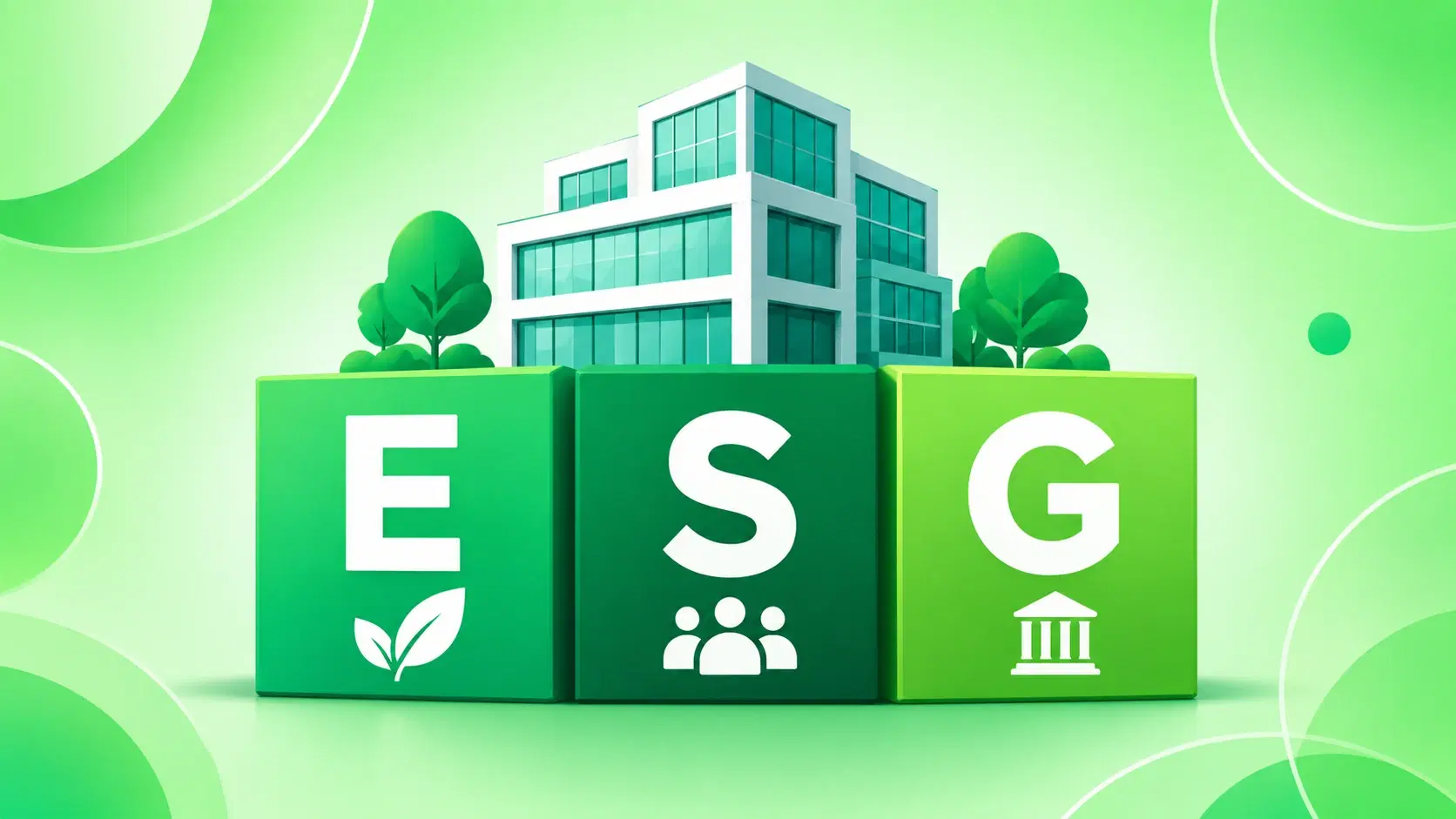
You have heard of ESG. Perhaps on a bank form, in a conversation with a large client or in a business news story. But when someone asks you what it means, the answer is not immediate.
You are not alone. Most SME managers are in exactly the same place: they know ESG exists, they sense they will have to deal with it sooner or later, but they do not understand concretely what it is or what it means for their business.
This article explains all of that, without jargon and without unnecessary theory.
ESG: three letters, one simple concept
ESG stands for Environmental, Social and Governance.
It is a structured way of assessing a company's performance beyond its financial results. Instead of looking only at profits, ESG measures how the company manages its impact on the environment, how it treats people (employees, suppliers, the community) and how it is run internally.
Think of it this way: the balance sheet tells you how much the company earns. ESG tells you how the company operates to achieve those results.
It is not an ideology. It is a measure of risk and value.
What each letter means in practice
E — Environmental: the company's impact on the environment
This dimension assesses the environmental impact of operations. It includes:
- CO₂ emissions: how much energy it consumes and from which sources
- Water and natural resource consumption
- Waste: what it produces and how it manages it
- Use of materials: hazardous or recyclable
For an SME in the food sector, for example, the "E" can be as concrete as: where do the raw materials come from? Is there food waste? Is the packaging recyclable?
You do not need to be an energy company to have an environmental impact. Every company has a footprint. What ESG asks is that you know it and can communicate it.
Emissions are divided into three scopes:
Scope 1
Direct emissions from the company's own operations, such as fuel in company vehicles.
Scope 2
Indirect emissions from purchased electricity.
Scope 3
Emissions across the whole value chain, including suppliers and clients.
For most SMEs, Scope 3 is the most relevant, because that is precisely where large clients will ask for data. However, it is also the hardest to calculate, so initial efforts usually focus on what is under the company's operational control: Scopes 1 and 2.
S — Social: how the company treats people
This dimension assesses the company's relationships with those around it:
- Employees: working conditions, pay, training, diversity, health and safety
- Supply chain: your suppliers' practices, selection criteria
- Local community: impact on the area where it operates
- Clients: transparency, data privacy, product quality
A construction company with a good "S" score may have clear on-site safety policies, regular worker training and supplier selection criteria that value fair working conditions.
G — Governance: how your company is run
This dimension assesses the internal rules of operation:
- Transparency: does the company publish reliable information about its activity?
- Ethics and integrity: is there a code of conduct? How is corruption prevented?
- Decision-making structure: who decides what, and how are important decisions made?
- Legal and tax compliance: is the company compliant with the obligations that fall to it?
For many SMEs, the "G" starts with something as simple as formalising decision-making processes, documenting practices and processes and having written codes of conduct.
Governance also includes innovation: how the company tests new ideas, adopts new technologies and organises decision-making to adapt to changes in the market and in regulation.
Why has ESG appeared now?
ESG is not a fad. It is a response to real pressures that are here to stay.
Banks and investors have changed their rules
The European Central Bank requires banks to assess the climate risk of the companies they finance, which has translated into ESG forms reaching SMEs when they apply for credit.
Large companies pull their supply chains along
The European CSRD directive requires large companies to report the ESG impact of their entire value chain, including their suppliers, often SMEs. If your company supplies a large company, you will receive ESG information requests. This is already happening.
Consumers and talent are changing
Eurobarometer studies show that more than 70% of Europeans consider it important for companies to adopt sustainable practices. And, to attract the best employees, especially younger ones, a company's reputation matters more and more.
European regulation is moving forward
Europe is the most active regulatory bloc in the world on corporate sustainability. The rules keep evolving. Knowing them in advance is a competitive advantage.
"But my SME is small. Does this apply to me?"
Yes, and you probably already do more than you think.
The vast majority of Portuguese SMEs already put sustainable practices in place in their day-to-day work: they cut waste to save costs, look after their employees to retain them, work with local suppliers for practical reasons and sort their waste because it is mandatory.
The problem is not that they do nothing. It is that they do not record, organise or communicate what they already do.
ESG, for an SME, starts exactly here: identifying what already exists, structuring that information and making it visible to those who need to see it.
A packaging manufacturer may already have:
- Solar panels installed (reducing emissions and costs)
- A training plan for production workers (social component)
- Documented monthly management meetings (governance)
None of these was created "because of ESG". But all of them are ESG data. They just need to be structured.
What ESG is not
ESG is not philanthropy.
It is not about making donations or running a volunteering programme. It is about how the business works every day.
ESG is not only for large companies.
Companies with 20 employees are already assessed on ESG criteria: by banks, by clients, by insurers and by procurement platforms.
ESG is not an immediate cost.
Many ESG practices reduce operating costs: energy efficiency, waste reduction, lower staff turnover.
ESG is not an annual report.
A report is the visible result. ESG is the continuous process of managing and measuring the business's impact.
How ESG concretely affects your SME
Access to financing
Portuguese and European banks are building ESG criteria into their credit assessments. Companies with a better ESG profile have access to more favourable terms: lower rates, green credit lines, mutual guarantees with simplified requirements.
In 2025, the Bank of Portugal published guidelines reinforcing the need for banks to assess climate risk in the companies they finance. Ignoring ESG may come to mean a higher cost of capital.
Read more: How ESG helps Portuguese SMEs access better financing
Access to markets and clients
Several procurement programmes run by large companies and public bodies already include sustainability criteria in their supplier forms. In Portugal, green public procurement is gaining weight in sectors such as construction, food and services.
Having your ESG data organised can be the difference between joining an approved supplier list and being left out of a tender.
Talent retention
A company that looks after its employees, has clear working policies and communicates its purpose has higher retention rates. In an increasingly competitive labour market, this factor has direct economic value.
Risk management
Climate change, supplier instability, regulatory changes: all of these risks have an ESG component. Companies that monitor them make better decisions earlier.
ESG and standards: what you need to know
When people talk about ESG, many acronyms come up: CSRD, ESRS, VS, GRI, CDP. You do not need to master them all at once.
CSRD (Corporate Sustainability Reporting Directive) is the European directive that requires large companies (more than 1,000 employees and more than €450M in turnover) to report audited sustainability information. For most SMEs, the CSRD does not apply directly, but it affects them indirectly, because their large clients are already covered and will ask their supply chain for information.
VS (Voluntary Standard, formerly VSME) is the voluntary European standard for companies not covered by the CSRD. Delegated Regulation (EU) 2026/1560 can already be used voluntarily. From financial year 2027, CSRD companies are capped at what VS provides for in requests to suppliers with up to 1,000 employees, and those suppliers have the right to refuse requests beyond it. It is organised in two modules: the Basic module (11 disclosure requirements) and a Comprehensive module that adds 9 requirements (C1–C9); together, Basic and Comprehensive make 20. For most Portuguese SMEs, the Basic module is already enough to respond to information requests from banks and large clients.
Read more: VS explained: a practical guide for SMEs
Regulatory timeline
| From financial year 2027 | CSRD mandatory for large companies in the post-Omnibus scope (more than 1,000 employees and more than €450M turnover) |
| Already usable | VS (Delegated Regulation (EU) 2026/1560) can already be used voluntarily; from financial year 2027, CSRD companies are capped at what VS provides for in requests to suppliers with up to 1,000 employees, who have the right to refuse anything beyond it |
| Ongoing | ESG data requests from banks and large clients to SMEs in the supply chain |
Where to start: 3 practical first steps
You do not need to do everything at once. ESG is a journey built incrementally.
Take stock of what already exists
Before creating anything new, map what your company already does. What environmental practices does it have? How does it manage its employees? What internal policies exist, even if unwritten?
Identify the three ESG topics most relevant to your sector
A construction company should start with on-site safety and the environmental impact of materials. A restaurant business should look at food waste and working conditions.
Record and organise the information
Even if it is in an Excel sheet at first, start recording data: monthly energy consumption, workplace accidents, waste volume, training delivered. Data that is not recorded does not exist for the outside world.
To take these steps in more detail, see the article 5 steps to start your SME's ESG journey.
Frequently asked questions about ESG
Is ESG mandatory for SMEs in Portugal? Not directly: European regulation (the CSRD) applies to large companies. But SMEs are affected indirectly, by banks that ask for ESG information for financing, by large clients that demand data from suppliers and by public procurement programmes that include sustainability criteria.
How much does it cost to implement ESG in an SME? The main cost is time, not money. Starting by organising the information that already exists essentially costs hours of work. Digital tools such as Sustanya were designed specifically to reduce that effort and make the process accessible to companies without specialist departments.
Do I need to hire a sustainability consultant? Not necessarily to get started. With the right tools, you can take the first steps in-house. Consultancy can be useful at more advanced stages, such as formal reporting, audits or certifications.
What is VS and should I adopt it? VS (Voluntary Standard, formerly VSME) is the voluntary European standard for companies with fewer than 1,000 employees (Delegated Regulation (EU) 2026/1560) and can already be used voluntarily. From financial year 2027, CSRD companies are capped at what VS provides for in requests to suppliers with up to 1,000 employees, and those suppliers have the right to refuse requests beyond it. It is divided into a Basic module (11 disclosure requirements) and a Comprehensive module that adds 9 requirements (C1–C9); together, Basic and Comprehensive make 20, and it is a useful reference for structuring ESG reporting without the complexity of the full frameworks.
How do I know which ESG indicators are most relevant for my sector? It depends on the sector and the size of the company. In general, an industrial SME should prioritise emissions and safety; a services company should focus on employee wellbeing and governance. Tools such as Sustanya help identify the most relevant indicators based on the company's profile.
Is ESG the same as CSR (Corporate Social Responsibility)? They have points in common, but they are not the same thing. CSR is more voluntary and focused on social initiatives. ESG is broader, includes the environmental and governance dimensions, and is increasingly built into financial and risk assessment processes.
Conclusion: ESG is not the future, it is the present
In 2027, ESG is no longer an option for companies that want to grow, access financing and keep relevant clients. It is a reality of the business environment.
The good news is that most Portuguese SMEs already do more than they think. The challenge is to structure that information, make it visible and use it as a competitive advantage.
You do not need to start with a 100-page report. You just need to start.
Explore the Sustanya platform in demo mode
See how you can organise your ESG data, identify the indicators most relevant to your sector and produce the reports that banks, clients and partners ask for.
Book a DemoRead also
What changes for SMEs under the new European ESG legislation
Deadlines, who is covered and what to do now
Clients demanding ESG? How to turn an obligation into an opportunity
Six steps to respond to requests from large clients
ESG is a business tool, not just compliance
How to turn ESG data into savings, contracts and financing
Did you enjoy this article?
Subscribe to our newsletter
Receive our ESG articles and updates directly in your inbox.
Subscribe to the newsletter